


Toowoomba Lodge Secretary
REGULAR MEETINGS :FIRST
SATURDAY EVERY MONTH (excl. January)
INSTALLATION : FIRST
SATURDAY IN NOVEMBER
AT THE NEIL STREET
MASONIC CENTRE.
TYLING TIME 7.30PM UNLESS
OTHERWISE ADVISED.
To find out more about Freemasonry and
find out how to join, please contact the Lodge
Secretary by E-Mail. Please click on the below
link to get answers now.
Neil Street~Toowoomba~Queensland~Australia
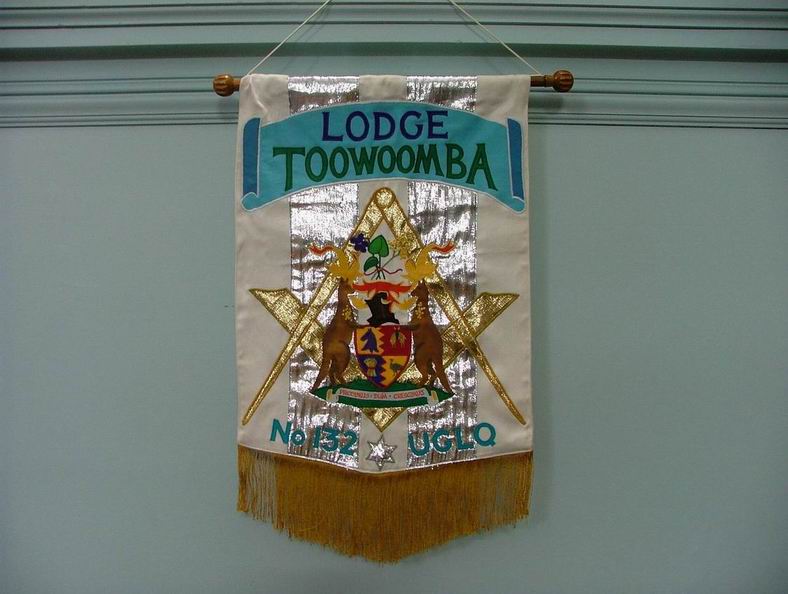
Toowoomba Lodge 132H
The greater Toowoomba
Region in Queensland is well known for its exciting history, parks,
gardens, cultural events, facilities and scenic views.
Nothing reinforces
Toowoomba's reputation as the Garden City more than the annual Carnival
of Flowers. Held each year in the last full week of September,
this is
a celebration of the richness of Toowoomba's environment when local
people and thousands of visitors take pleasure in the beautiful gardens
and enjoy the many cultural events staged at this time.
The earliest township in
what is now the immediate Toowoomba area was Drayton, a small trading
and service settlement, in a gully where the tracks of the early
bullock teamsters met. Land at a nearby swamp was surveyed in
1849 as the Drayton Agricultural Reserve. Town blocks between the
east and west swamps were surveyed in 1853 and became Toowoomba.
Early urban development of Toowoomba was in James Street which carried
the traffic from the Toll Bar on the range en route to Drayton and
beyond. Freemasonryin the region started soon after the area
became known as Toowoomba.
From its early
beginning, Toowoomba Lodge has not been without some trials and
tribulations and its survival to reach its centenary must be attributed
to those members who have shown commitment and love to their lodge.
The reason for the creation of an Irish Constitution Lodge in Toowoomba is not known due to a fire in April 1901 which destroyed all of the early records. However it is known that Toowoomba Lodge No. 346 IC was consecrated and officers were installed in the Lodge Rooms, the Institute, Margaret Street on Friday 12 October 1900 at 7pm. Nearly 40 brethren were present including nine Grand Officers from Brisbane when WBro
John Henzell, PM was installed as its first Master with all other officers being Master Masons. The ballot in those days needed to be "fair in the south", "clear in the west" and "square in the east" and if a member was absent for three meetings out of six, he received a "strongly worded letter". Members seeking election to office needed to prove their fitness before being elected.
Early records show that
the Lodge flourished and membership increased, despite the rent for the
Masonic Hall set at £40.00 per year (approximately $95 today) in
1909 and in 1913 the singing of "For he's a jolly good fellow" and the
"giving of McDuffs" were banned.
Today the Lodge is prospering. New members are joining on a regular basis with an influx of newer and younger applicants. It is pleasing to note that many Master Masons occupy office in the Lodge. Currently its proud Master is WBro Gordon O'Donohue.
For more detailed information, you may wish to obtain the Centenary Booklet prepared by VWBro G Geizer from the Secretary.
The present day
Toowoomba Lodge 132 is an "A. F. & A. M." Lodge.
Member
Webmaster
Web Design by Magician
Welcome to
the Web Site. Please feel free to browse and sign our
Guestbook.
This site was designed with information and
help for those who want to be involved in Freemasonry. I would like to
warmly thank everyone who has suggested ideas and given informational
input to this site. I am proud to be a Freemason, and feel that
everyone can benefit from joining a Lodge. As the saying goes:
2B1ASK1 !